
· by Michael Blair, Nashville's Chimney Sweep
When a chimney needs a rebuild or a new liner, the first question a lot of homeowners ask is whether the insurance will pay for it. The answer turns on how the damage happened more than on what was damaged. The Tennessee Department of Commerce and Insurance’s claims guidance after Hurricane Helene says damage from wind, wind-driven rain, trees or other falling objects is typically covered under most standard homeowners policies, and it tells consumers to check the policy and call the agent when something is unclear. Whether slow wear and deterioration are excluded is a question for your own policy, so read the declarations page and the exclusions section, and ask the agent before assuming either way. What follows is how the line tends to fall on chimneys, and where the answer has to come from your agent.
Which chimney damage does a policy usually cover?
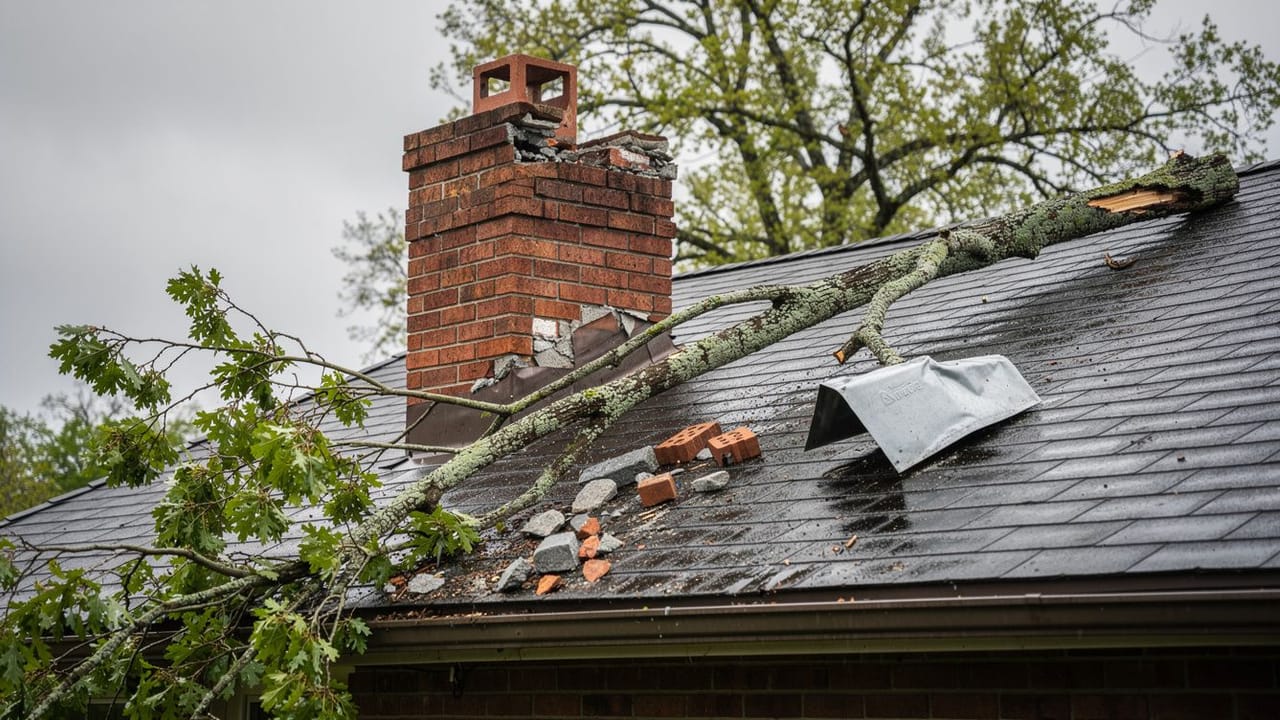
The events a policy is built for are the ones with a date on them. A tree limb or a wind gust that takes the top off the stack is the plainest case, and it is the kind of falling-object and wind damage the TDCI release lists as typically covered. A chimney fire, a lightning strike that blows out brick or hail that cracks a cap happen suddenly too, but how your policy pays for them, and what deductible applies, is in its wording. Whatever the cause, TDCI advises taking photos or video of the damage, covering what needs covering to prevent more of it, and holding off on permanent repairs until the insurance company has inspected the property.
A lot of what we find on chimneys here is not like that. A crown that cracked, took on water and let the freeze-thaw cycle spall the brick over many winters is wear and deterioration. So is mortar washed out of the joints, a rusted damper, a clay flue tile cracked from age, or a chimney leaning because the ground under it settled. A policy may exclude damage like that as wear and deterioration even when the repair is large, so ask your agent how yours reads before counting on a claim. If the work is going ahead either way, our chimney repair page explains how we price it from what the camera shows.
What are the signs of a chimney fire?
If you think a chimney fire may have happened, the signs can be small: a roaring sound from the flue, a hot smell, or flakes of puffed creosote on the roof or in the firebox the next morning. What we look for afterward is inside the chimney: cracked or displaced flue tiles, a warped damper, heat that reached nearby framing. Do not light another fire until the chimney has been inspected, because a flue that cracked in one fire gives the next one a path to the house. How the creosote gets there in the first place is the subject of our post on creosote and chimney fires.
For the inspection itself we work from the table in NFPA 211, the chimney and venting standard. In the NFPA 211 technical committee’s text of that table, a Level II inspection is called for after an operating malfunction or an external event likely to have caused damage to the chimney, and it includes inspection by video scanning or other means. We treat a fire as that kind of event and run our inspection camera through the flue. The footage and the photos of the chimney top are the photo and video record TDCI tells homeowners to keep, and the same release says to be ready to give the claims adjuster records of improvements made before the damage, so keep earlier inspection reports with it.
Leaks and the water they let in
A leaking chimney raises two questions on a claim: the water damage inside, such as a stained ceiling or wet drywall beside the hearth, and the failed flashing, cracked crown or missing cap that let the water in. Among the things TDCI says a standard policy typically does not cover is interior water damage from a storm when there is no damage to the roof or walls of the home. How your policy treats the leak itself, or a leak that ran for months and left rot or mold behind, is set by its exclusions, so put that question to the agent. The source of the water is cap, crown and flashing work, and we price it separately from anything inside.
This is where records help. TDCI also tells homeowners to keep notes of the name, day, time and content of every conversation with the insurer. A file showing the chimney was swept and inspected every year, with the cap and crown noted as sound, is what we would want to hand an adjuster. Without one, there is little to show what the chimney looked like before the leak started.
- Sweep invoices with dates
- Inspection reports and camera footage
- Photos of the chimney top taken during inspections
- Receipts for repairs, caps and liners
- The date and details of any new insert or stove
Wood stoves, inserts and what the insurer knows
Ask your agent whether the policy needs to know about a wood-burning appliance, and raise it before a wood stove or an insert goes in rather than after. Permits are worth settling up front as well. In Nashville, Metro Codes’ list of building projects which may or may not require a permit shows a gas/mechanical permit for a wood stove and for a fireplace insert in one- and two-family homes, and a permit for a new flue or liner or for repairing more than 25 percent of a chimney, while minor tuckpointing needs none. That list was last revised in 2011, so confirm with Metro Codes, or with your county codes office outside Davidson County, before the work starts, and keep the permit and the installer’s paperwork with the house records.
The same records help at sale. The NFPA 211 table also calls for a Level II inspection upon sale or transfer of the property, and a file of annual sweeps and a sound liner answers a lot of a buyer’s questions early. When you need that inspection, or a repair priced before you call the agent, ask us for a free estimate.
Sources
- Tennessee Department of Commerce and Insurance, consumer insurance information about filing claims after Hurricane Helene (2024) — Wind, trees and falling objects typically covered; interior storm water with no roof or wall damage typically not; photograph damage; no permanent repairs before the insurer inspects; records of prior improvements; notes of conversations
- NFPA 211 Technical Committee, Committee Input No. 9 on Chapter 15, Table 15.2.1 Selection of Inspection Type — Level II after an operating malfunction or external event likely to have damaged the chimney, and upon sale or transfer; access includes video scanning or other means
- Metro Nashville Codes, List of building projects which may or may not require a permit (revised 2011) — Gas/mechanical permit for a wood stove and a fireplace insert; permit for a new flue or liner and for chimney repair over 25 percent; none for minor tuckpointing
FAQ
What Homeowners Insurance Covers on a Chimney — questions
Does homeowners insurance cover chimney repair?
It depends on the cause and on your policy. Tennessee’s Department of Commerce and Insurance says damage from wind, trees or other falling objects is typically covered under most standard homeowners policies. Slow damage such as freeze-thaw spalling, old mortar or a cracked crown may be excluded as wear and deterioration. Your policy’s exclusions section and your agent have the final word.
Does insurance cover a chimney fire?
Ask your agent how your policy treats a chimney fire and what deductible applies. Photograph the damage, call the insurer before any permanent repair, and have the flue inspected before you use the fireplace again. NFPA 211 calls for a Level II inspection after an event likely to have damaged the chimney, which can include a video scan of the flue, and that footage is part of the record of the damage.
Do I have to tell my insurance company about a wood stove?
Ask your agent, since the answer is in your policy and the insurer’s own questions. It is worth raising before the stove is installed rather than after. In Nashville, Metro Codes lists a gas/mechanical permit for a wood stove or a fireplace insert, so keep the permit and the installer’s paperwork with your house records.
How dangerous is a chimney fire?
Serious, and the next fire is the bigger worry. A chimney fire can crack or displace flue tiles, warp the damper and push heat into framing, and a cracked flue gives the following fire a path into the house. Don’t light the fireplace again until a Level II inspection under NFPA 211, which can include a video scan, is complete.