
· by Michael Blair, Nashville's Chimney Sweep
Most of the trouble we hear about from wood burners, smoke in the room, a fire that will not throw heat, a flue that collects creosote faster than it should, comes back to one number: the moisture content of the wood. UT Extension’s publication on the moisture content of seasoned firewood calls moisture the most important property of good firewood and says it should be below 20 percent before it is burned. Wood that has not dried out properly, the Tennessee Division of Forestry’s firewood buying advice warns, produces less heat, burns poorly and creates unnecessary soot and smoke.
What does seasoned firewood mean?
Seasoned just means dried, and the target is that same 20 percent. How long it takes depends on the wood. EPA’s Burn Wise safety kit article says freshly cut wood should be stored for a minimum of 6 months for softwood and 12 months for hardwood, and that splitting it before it is stacked makes it dry much faster. The Division of Forestry gives nine months as typical. Oak cut this fall is, by the EPA’s count, wood for next winter.
UT Extension also points out that it can be hard to be sure purchased firewood is properly seasoned, so the word on a delivery ticket settles nothing. A moisture meter does, and EPA’s Best Wood Burning Practices page recommends testing with one before you burn. When we check a customer’s wood, we split a piece and read the fresh face in the middle of it. Under 20 goes in the firebox. Anything over that goes to the back of the stack for later, whatever the seller called it.
What does wet wood do to a chimney?
Wet wood makes for a less efficient fire, and the Burn Wise kit draws the line from there to the flue: the less efficient the fire, the more smoke it puts out and the more creosote can build up. K-State Research and Extension’s Firewood 101 says the smoke from green wood adds to creosote buildup in chimneys and creates a potential fire hazard. That is the deposit our chimney sweeping removes, and it matters: EPA’s Learn Before You Burn page puts the share of home fires caused by creosote buildup in the chimney at nearly 7 percent. Our post on creosote and chimney fires covers how that buildup ignites.
Inside the house, K-State sums up wet wood as more smoke and less heat. You can often tell before it burns. EPA’s burning guidance describes properly seasoned wood as darker, lighter in weight, and hollow-sounding when one piece is hit against another. If the wood tests dry and smoke still rolls into the room, the cause is somewhere else, and our post on why smoke comes into the room when you light a fire walks through the usual suspects.
- Seasoned: darker, lighter in the hand, a hollow knock between two pieces
- Not ready: heavier for its size, a dull knock, a smoky fire that gives little heat
- What settles it: a meter reading under 20 percent
Species that burn well here
Different woods burn differently. The Division of Forestry’s 2008 buying advice uses oak and pine as its example: oak burns slower and produces less smoke, while pine burns faster and produces more soot and smoke. K-State’s list of woods to look for runs oak, locust, hickory, ash and sugar maple, though that advice is written for Kansas. Whatever the species, EPA’s rule is short: do not burn wet or green wood. We would rather see a customer burn whatever tests dry than hold out for oak that has not had its year.
How you buy matters as much as what. The Tennessee Department of Agriculture’s 2015 firewood advice says firewood must be sold by the cord or by fractions of one, that a cord by law equals 128 cubic feet, and to be wary of terms such as face cord, rack and rick. It also asks buyers to obey firewood quarantines and buy where they will burn, so pests do not ride in on a load from somewhere else.
How should firewood be stored in a humid climate?
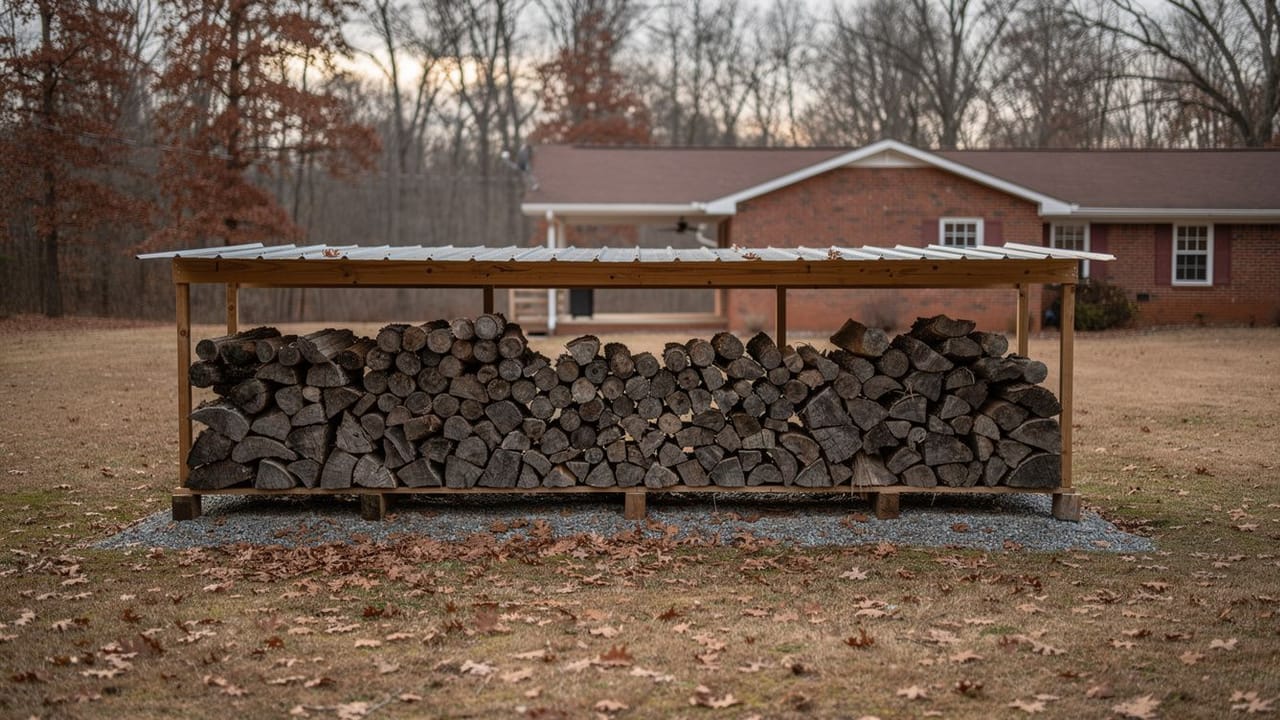
Air does the drying, so we set a stack up for airflow first. Get it off the ground on pallets or rails, cover the top and leave the sides open. EPA is specific about the sides: covering them traps in moisture, which is exactly what a tarp pulled down over the whole pile does. K-State adds that raising the stack off the ground increases air circulation and drying.
Keep the main pile away from the house. K-State’s Firewood 101 warns that firewood stacked against a building can cause a moisture problem and gives termites and carpenter ants a hidden, direct route into the structure. As for timing, UT Extension’s advice is to buy and stack firewood well before it is needed, and it adds that there is no danger in over-seasoning wood, since drier is better. Buy next winter’s wood this spring. If a load arrives in October, meter it before it goes in the stove, and if the flue has already seen a season of wet wood, ask us for an estimate on a sweep before the next fire.
Sources
- UT Extension, W179 Moisture Content of Seasoned Firewood (2010) — Moisture is the most important property; season below 20 percent; hard to be sure purchased wood is seasoned; buy and stack well ahead; no danger in over-seasoning
- Tennessee Department of Agriculture, TDA Says Don’t Get Left in the Cold When Buying Firewood (2008) — Unseasoned wood gives less heat, burns poorly, makes soot and smoke; nine months typical to season; oak slower and less smoky, pine faster with more soot
- Tennessee Department of Agriculture, Stay Warm This Winter with the Right Firewood (2015) — Sold by the cord or fractions; a cord is 128 cubic feet by law; be wary of face cord, rack and rick; obey quarantines and buy where you will burn
- US EPA Burn Wise, Best Wood Burning Practices (January 2025 snapshot) — Burns best under 20 percent; test with a moisture meter; seasoned wood darker, lighter, hollow-sounding; top covered and sides open; do not burn wet or green wood
- US EPA Burn Wise, Sample Article: Burn Wise Health and Safety Awareness Kit — Minimum 6 months for softwood and 12 for hardwood; split wood dries faster; less efficient fire means more smoke and creosote
- US EPA Burn Wise, Learn Before You Burn Wood: What You Can Do — Nearly 7 percent of home fires caused by creosote buildup in the chimney
- Kansas State University Research and Extension, Johnson County, Firewood 101 (2024) — Green wood smoke adds to creosote; more smoke and less heat; species to look for in Kansas; stack off the ground for airflow; woodpile against a house invites termites and moisture
FAQ
Firewood That Will Not Wreck Your Chimney — questions
How do I know if firewood is seasoned?
Test it with a moisture meter on a freshly split face. Under 20 percent is ready to burn. Seasoned wood also tends to be darker, lighter in weight and hollow-sounding when two pieces are knocked together, but wood sold as seasoned is not always dry, and the meter is the reliable check.
Does burning wet wood cause creosote?
It is a major cause. Wet wood burns less efficiently, and a less efficient fire puts out more smoke and leaves more creosote in the flue. A cool, smoldering fire does the same even with dry wood, which is why we look at both the wood and how the fire is run.
What is the best firewood in Tennessee?
Hardwood such as oak is a good choice for a long, steady fire, and the Tennessee Division of Forestry notes that oak burns slower and with less smoke than pine. Hardwood needs at least 12 months to season by EPA guidance, so the best firewood is whichever species has had its time and reads under 20 percent on a meter.
How do you prevent creosote buildup?
Start with the wood. Burn only firewood that reads under 20 percent moisture on a meter, since wet wood gives a less efficient, smokier fire that leaves more creosote in the flue. Season hardwood for at least a year, store it with the top covered and the sides open, and book a sweep after a season of wet wood.